
تقارير
الإصلاح الصحي في لبنان: تجربة ناجحة في تقرير منظمة الصحة العالمية لعام 2010
الكاتب: منظمة الصحة العالمية
المصدر: منظمة الصحة العالمية
المصدر: منظمة الصحة العالمية
This special box on Lebanon has been copied verbatim from the recently released (November 22nd) “World Health report 2010 on Health Care Financing”
Box 4.2. Lebanon’s reforms: improving health system efficiency, increasing coverage and lowering out-of-pocket spending
In 1998 Lebanon spent 12.4% of its GDP on health, more than any other country in the Eastern Mediterranean Region. Out-of-pocket payments, at 60% of total health spending, were also among the highest in the region, constituting a significant obstacle to low-income people. Since then, a series of reforms has been implemented by the Ministry of Health to improve equity and efficiency.
The key components of this reform have been: a revamping of the public-sector primary-care network; improving quality in public hospitals; and improving the rational use of medical technologies and medicines. The latter has included increasing the use of quality-assured generic medicines. The Ministry of Health has also sought to strengthen its leadership and governance functions through a national regulatory authority for health and biomedical technology, an accreditation system for all hospitals, and contracting with private hospitals for specific inpatient services at specified prices. It now has a database that it uses to monitor service provision in public and private health facilities.
Improved quality of services in the public sector, at both the primary and tertiary levels, has resulted in increased utilization, particularly among the poor. Being a more significant provider of services, the Ministry of Health is now better able to negotiate rates for the services it buys from private hospitals and can use the database to track the unit costs of various hospital services.
Utilization of preventive, promotive and curative services, particularly among the poor, has improved since 1998, as have health outcomes. Reduced spending on medicines, combined with other efficiency gains, means that health spending as a share of GDP has fallen from 12.4% to 8.4%. Out-of-pocket spending as a share of total health spending fell from 60% to 44%, increasing the levels of financial risk protection.
Box 4.2. Lebanon’s reforms: improving health system efficiency, increasing coverage and lowering out-of-pocket spending
In 1998 Lebanon spent 12.4% of its GDP on health, more than any other country in the Eastern Mediterranean Region. Out-of-pocket payments, at 60% of total health spending, were also among the highest in the region, constituting a significant obstacle to low-income people. Since then, a series of reforms has been implemented by the Ministry of Health to improve equity and efficiency.
The key components of this reform have been: a revamping of the public-sector primary-care network; improving quality in public hospitals; and improving the rational use of medical technologies and medicines. The latter has included increasing the use of quality-assured generic medicines. The Ministry of Health has also sought to strengthen its leadership and governance functions through a national regulatory authority for health and biomedical technology, an accreditation system for all hospitals, and contracting with private hospitals for specific inpatient services at specified prices. It now has a database that it uses to monitor service provision in public and private health facilities.
Improved quality of services in the public sector, at both the primary and tertiary levels, has resulted in increased utilization, particularly among the poor. Being a more significant provider of services, the Ministry of Health is now better able to negotiate rates for the services it buys from private hospitals and can use the database to track the unit costs of various hospital services.
Utilization of preventive, promotive and curative services, particularly among the poor, has improved since 1998, as have health outcomes. Reduced spending on medicines, combined with other efficiency gains, means that health spending as a share of GDP has fallen from 12.4% to 8.4%. Out-of-pocket spending as a share of total health spending fell from 60% to 44%, increasing the levels of financial risk protection.
Encadré 4.2. Les réformes du Liban:améliorer l'efficience du système de santé, augmenter la couverture et réduire les dépenses directes des ménages.
الإطار 2-4. إصلاحات لبنان: تحسين كفاءة النظام الصحي، وزيادة التغطية، وخفض الإنفاق المياشر من أموال المرضى
WHO FULL REPORT
CHAP.4 (LEBANON BOX 4.2)
Health Reform In Lebanon Key Achievements at a glance -Walid AMMAR MD, Ph.D
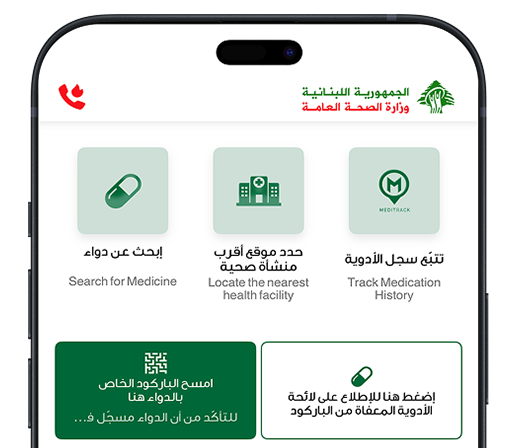
حمّل النسخة الجديدة من تطبيق وزارة الصحة العامة
للحصول على آخر المستجدات .
ستزوّدك النسخة الجديدة من تطبيق وزارة الصحة العامة بجميع المعلومات الموثوقة حول كوفيد-19، مع تحديثات مستمرة للحالات المؤكدة والبيانات. وإذا كانت لديك أي أعراض، فستكون ميزة “فحص الأعراض” دليلك للمساعدة الذاتية لتقييمها.